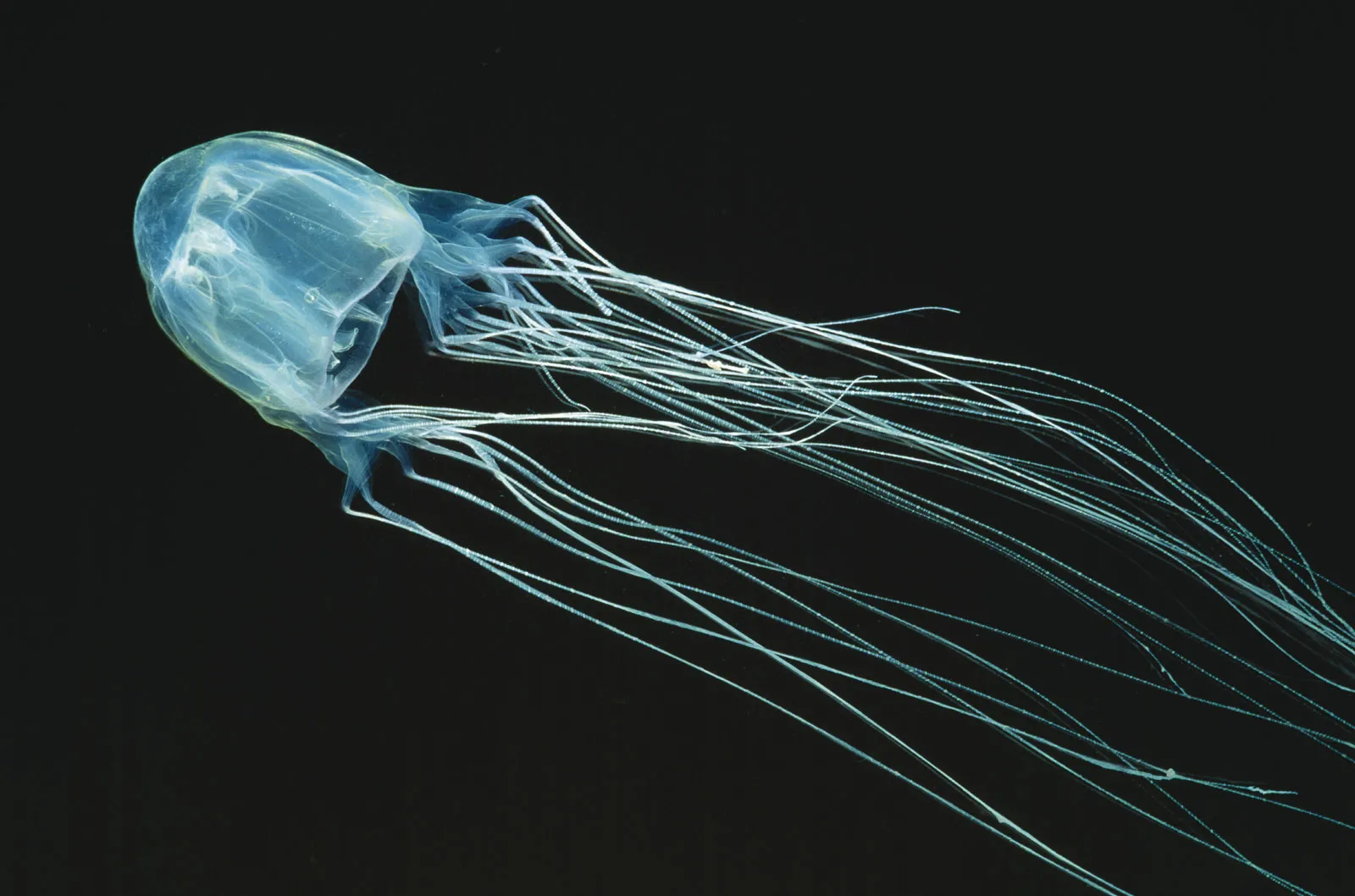
Name: Box jellyfish.
Scientific name: Chironex fleckeri
Class: Cubozoa
Description: They are distinguished by their cube-shaped bell that reaches 16cm (6.3 in) in diameter but can grow up to 35cm (14 in). They have 15 tentacles that when contracted are 6 in long, but when hunting, the arms go thinner and extend to around 3m (9.8 ft) long.1 The arms are covered in many stinging cells called cnidocytes. Box jellyfish are transparent, making them nearly impossible to see in the waters.
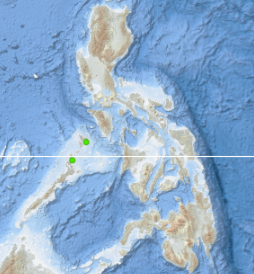
Habitat: Box jellyfish linger closer to the shore, and near-shore places such as mangroves, coral reefs, kelp forests and sandy beaches. ^[2}^
Threat: Very dangerous to humans
**Treatment : **Immediately flush the area with vinegar to deactivate undischarged nematocysts ( the venom ) to prevent release of additional venom.
Remove additional tentacles with a towel or glove to prevent second hand stinging. The arms are still active after the body is dead and or if they’ve been detached.
Fun fact: Box jellies have 4 eye-clusters with 24 eyes. Some of the eyes seem capable of forming images but further information is debated or unknown. They are attracted to light of different colors (white, red, orange, yellow, and green). Blue elicits a feeding behavior2 but darker objects cause them to move away.^[2}^
*there is not much information on this jelly, some info may be inaccurate.
References