Name: Moon jellyfish/jelly, common jellyfish and saucer jelly.
Scientific name: Aurelia aurita
Class: Scyphozoa
Description: It’s almost entirely translucent and ranges in size from 25-40 cm (10-16 in) in diameter. Its most notable feature is the four horseshoe-shaped gonads located at the top of its bell. They lack long tentacles, instead having short, fine ones that line the bell margin.1 The moon jelly has the ability to sting but it doesn’t pose a threat to humans, only offering a little discomfort and a rash which lasts a few hours. 2
Habitat: They are found in temperate and tropical waters, as well as near the surface of shallow bays and harbors.34
Threat: Not dangerous to humans.
Fun fact: In 1991, NASA launched 2,478 jellyfish polyps into space to test how human babies would react to being raised in a low gravity environment, due to both humans and jellyfish having calcium crystals in their body which is used to help us understand gravity’s pull, this resulted in the jellyfish having trouble navigating in the ocean after the experiment.5
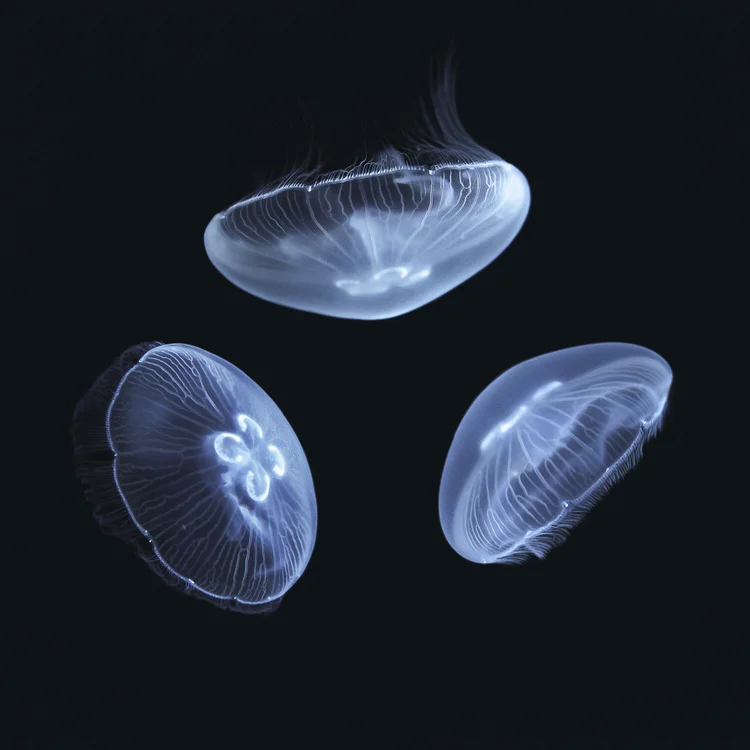 sunset marine labs
References